
Ego is the Enemy: Staying Humble in Every Stage

· 2 min read

Arpit Sharma
Maintainer of this blog

Ego is the Enemy - The Three Stages of Life

Ryan Holiday argues that at any given time, we are in one of three stages: Aspire, Success, or Failure. In each stage, ego is the enemy that prevents us from moving forward.

1. Aspire

When you are starting (e.g., preparing for an exam or launching a project), ego wants you to talk more than you work.

  • Silence is Rare: Speaking about your goals releases a premature sense of accomplishment. Waste your energy on the action, not the announcement.
  • Document Your Work: Henry Ford once said, "You can't build a reputation based on what you are going to do."

2. Success

Success is often where the real danger begins. It makes us believe we are "special" or "above" the rules.

  • Keep Your Identity Small: The more you identify with your fame, title, or property, the more you have to lose.
  • Stay a Student: The moment you think you "know it all," you stop growing. If you can't swallow your pride, you can't lead.

3. Failure

Failure is inevitable, but how you react to it defines you.

  • Alive Time vs. Dead Time: "Dead time" is when you are passive and waiting for things to change. "Alive time" is when you are utilizing every second of the failure to learn and prepare for the next round.
  • Sweeping the Floor: Legend has it that the floor needs to be swept every single day. Similarly, your talent and mindset need daily practice, or they will gather dust.

#learnings
Drop the Labels: How to Connect with Anyone

· 2 min read
Arpit Sharma
Maintainer of this blog

Connection Over Classification

When you meet new people, your brain naturally tries to label them—where they are from, what they do, or how they look. But these labels are barriers. To truly connect, you must Drop the Labels.

1. Acceptance Without Barriers

We all start as children without biases. As we grow older, we learn to notice differences. But if you walk into a room with an open mind, animals and humans alike will feel the connection immediately. Ego is the wall; love is the bridge.

2. The 110% Rule

Give 110% of your attention when talking to anyone. People remember how you made them feel more than what you said. Everybody fundamentally wants to be heard, respected, and understood.

3. The Communication Breakdown

Remember that communication is far more than just words:

  • 7% Words: What you actually say.
  • 38% Tone: Your inflection and pitch.
  • 55% Body Language: Your face, hands, and posture.

4. Practical Connection Tips:

  • Simplify Your Language: Avoid bookish jargon. Good communication is being understood by a 4th grader.
  • Master the 50-70 Rule: Maintain eye contact for 50-70% of the time to show confidence and interest.
  • Manage Your Pitch: High pitch shows nervousness; too low can feel aggressive. Find the calm middle ground.
  • Eliminate "Failure Words": Stop using filler words like "hmm," "obviously," and "you know." Silence is better than a filler.

#learnings

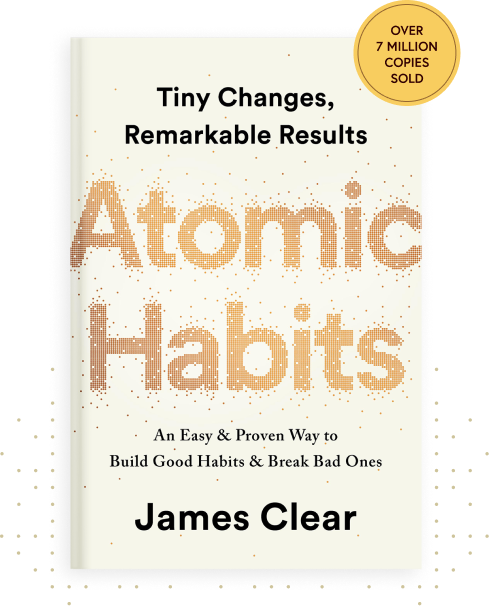
Atomic Habits: How Small Changes Lead to Extraordinary Results

· 2 min read
Arpit Sharma
Maintainer of this blog

Atomic Habits - Small Wins, Compounding Results

James Clear argues that the quality of our lives depends on the quality of our habits. We don't rise to the level of our goals; we fall to the level of our systems.

1. The Power of Compounding

A 1% improvement every day makes you 37 times better by the end of the year. This is the Aggregation of Marginal Gains.

  • Example: The UK cycling team won back-to-back medals after decades of failure by improving everything (seats, tires, even pillows) by just 1%.

2. Identity-Based Habits

Most people focus on outcomes (e.g., "I want to lose weight"). Instead, focus on identity (e.g., "I am the type of person who never misses a workout"). Every action you take is a vote for the person you wish to become.

3. The 4 Laws of Behavior Change

To build a good habit, follow these laws:

  1. Make it Obvious: Use "Environment Design." If you want to read more, put a book on your pillow.
  2. Make it Attractive: Use "Temptation Bundling." Only watch your favorite show while on the treadmill.
  3. Make it Easy: Use the 2-Minute Rule. If a habit takes less than 2 minutes, do it now.
  4. Make it Satisfying: Use habit tracking to visualize your wins.

4. The Goldilocks Rule

The human brain loves challenges, but only if they are "just right." If a task is too easy, you get bored; if it's too hard, you lose motivation. Aim for the zone just outside your comfort.

#learnings

Atomic Habits

The 4-Hour Workweek: Escaping the 9-5 Grind

· 2 min read
Arpit Sharma
Maintainer of this blog

The DEAL Formula to Lifestyle Design

Tim Ferriss’s cult classic is about more than just working 4 hours; it's about Lifestyle Design. The book follows the DEAL acronym: Definition, Elimination, Automation, and Liberation.

1. Ask for Forgiveness, Not Permission

If the potential damage is minimal and reversible, don't wait for a "yes." Waiting for others to guide you is a form of procrastination. Learn by doing, making mistakes, and iterating quickly.

2. Focus on Strengths, Not Weaknesses

Most people spend their lives trying to fix their flaws to become "well-rounded." Ferriss argues that multiplier results come from doubling down on your top 3 strengths rather than becoming "average" at your weaknesses.

3. Eliminate the "Fear of the Void"

Many people stay in unhappy jobs because they fear the unknown. They expect things will change "some day." Dreamlining is the antidote—calculating the exact cost of your dreams and realizing that your "worst-case scenario" is often quite survivable.

4. The 80/20 Rule (Pareto Principle)

80% of your results come from 20% of your activities.

  • Identify the 20% of tasks that produce the most value and focus exclusively on them.
  • Fire the 20% of clients who cause 80% of your stress.

Conclusion: Too much money is rarely the answer. The real currency is Time and Mobility.

#learnings

Finish: The Practical Guide to Killing Perfectionism

· 2 min read
Arpit Sharma
Maintainer of this blog

FINISH: Why Done is Better Than Perfect

Most people don't have a problem starting; they have a problem finishing. Jon Acuff argues that our biggest obstacle isn't laziness—it's perfectionism. Here is the blueprint to escape the perfectionism trap:

1. Cut Your Goal in Half

Perfectionism tells you to "Go Big or Go Home." Acuff says to cut your goal in half. By making the goal achievable, you take the pressure off and actually build the momentum needed to cross the finish line.

2. Choose What to Bomb

You cannot be perfect at everything while chasing a new goal. Be intentional about what you are going to let slide (e.g., maybe your house won't be as clean while you're writing that book). Write a "Not-to-Do" list to stay focused.

3. Make it Fun if You Want it Done

Satisfaction and performance are linked. Identify what motivates you:

  • Reward Motivation: "If I finish this, I get to enjoy a guilt-free movie."
  • Fear Motivation: "If I don't finish this, I'll have to pay a fine or lose health." Use whichever works for you to keep the process enjoyable.

4. Leave Your "Hiding Places"

A Hiding Place is an activity you focus on instead of your goal (e.g., organizing your desk when you should be coding). A Noble Obstacle is a rational-sounding excuse (e.g., "I can't start the YouTube channel because I don't have a 4K camera").

The Bottom Line: Chase progress, not perfection. Publish your "Version 1.0"—however bad it may be—and then iterate.

#learnings

Crush It! - Turning Passion into a Personal Brand

· 2 min read
Gary Vaynerchuk
Original Author
Arpit Sharma
Maintainer of this blog

Crush It: The Art of Personal Branding

Gary Vaynerchuk’s core message is simple: in the digital age, anyone can turn their passion into their profession. But doing so requires more than just interest—it requires turning yourself into a Personal Brand. Here are the actionable steps to nail it:

1. Identify Your Content Medium

Don't follow the crowd; follow your strengths. If you're great on camera, use Video (YouTube/TikTok). If you have a "radio face" but a great voice, use Audio (Podcasts). If you think more clearly in text, use Writing (Blogs/Twitter).

2. Document, Don't Create

Gary’s "secret sauce" is to stop overthinking and start documenting your journey. You don't need a high-budget studio; you need authenticity. People connect with the struggle and the process more than the perfected end product.

3. Hustle and Care

Hustle is the cost of entry, but "caring" is the differentiator. You must care about your community more than the money. Reply to every comment, engage with every follower, and build real relationships.

4. Be Your Own Brand

In the 21st century, your personal brand is your resume. Whether you're an employee or a business owner, being known for "what you do best" is your only survival strategy in an automated world.

#learnings