
7 posts tagged with "book-summary"

View All Tags

Rich Dad's Guide to Investing: Building Lasting Wealth

· 2 min read

Robert Kiyosaki
Original Author
Arpit Sharma
Maintainer of this blog

Key Principles from Rich Dad's Guide to Investing

Robert Kiyosaki’s guide isn't about particular stocks; it's about the Mindset of an investor. Here is the distilled wisdom on building an investment-first lifestyle:

1. Distinguish Good vs. Bad "Investments"

Kiyosaki warns against using your capital for "liabilities" disguised as lifestyle upgrades.

  • Bad Moves: Quitting a steady job for a "world tour" without passive income, or liquidating family stability for shallow desires.
  • Asset-First: Every profit should be reinvested. The goal is to maximize the gap between your income and your living expenses by using that gap to buy more assets.

2. The 3 E's of an Investor

To be a successful investor, you must acquire these three "E's":

  1. Education: Financial literacy is your #1 asset. Investment without knowledge is just gambling.
  2. Experience: Start small. You need the "street smarts" of seeing how numbers move in real-time.
  3. Excess Cash: Never let cash sit idle. Use it to acquire more "meaningful work" (like hiring employees for monotonous tasks) so your own time is freed up for high-level strategy.

3. Investment as a Knowledge Compound

Knowledge is a unique asset because it compounds faster than money. By investing in yourself—through books, seminars, and networking—you become an "Inside Investor."

The Golden Rule: Never buy a stock just to sell it. Buy the company because you believe in its value as if it were your own business.

#learnings
Own It: What Maturity Actually Means

· 2 min read
Arpit Sharma
Maintainer of this blog

What Does it Really Mean to be Mature?

Most people define maturity by age, but real maturity is binary: It is the ability to own your actions (and even others' mistakes) to find a solution rather than a target for blame.

The Lesson of the Croma Cooler

I recently had a frustrating experience with an online order. I needed a replacement for a faulty air cooler. When the pickup agent was rude and refused to take the unboxed unit, I reacted predictably: I matched his tone, defended my stance, and slammed the door.

Result: A week passed, and I was still stuck with a broken cooler and a heated mood.

If I had shown maturity—owning the outcome (getting the cooler replaced) instead of the ego-clash—I could have handled it differently, stayed calm, and resolved the issue that same day.

10 Pillars of Maturity

To be mature is to master these habits:

  1. Take Responsibility: Don't just own your successes; own your blockers.
  2. No Complaints: Focus on "What's next?" instead of "Why me?"
  3. Stop Gossiping: Small minds discuss people; mature minds discuss ideas.
  4. Self-Awareness: List your own weaknesses. Knowing them is the first step to neutralizing them.
  5. Leave Ego Behind: Ego is a barrier to learning.
  6. Seek Value, Not Attention: Do great work, and the praise will find you.
  7. Total Honesty: Small lies build a weak foundation.
  8. The Emotional/Rational Balance: Feel your emotions, but let your rational mind lead.
  9. Calm Response to Rejection: Rejection is just data, not a personal attack.
  10. Stay Curious: Maturity isn't "knowing everything." Keep the child within alive by asking questions.

#learnings

Ego is the Enemy: Staying Humble in Every Stage

· 2 min read
Arpit Sharma
Maintainer of this blog

Ego is the Enemy - The Three Stages of Life

Ryan Holiday argues that at any given time, we are in one of three stages: Aspire, Success, or Failure. In each stage, ego is the enemy that prevents us from moving forward.

1. Aspire

When you are starting (e.g., preparing for an exam or launching a project), ego wants you to talk more than you work.

  • Silence is Rare: Speaking about your goals releases a premature sense of accomplishment. Waste your energy on the action, not the announcement.
  • Document Your Work: Henry Ford once said, "You can't build a reputation based on what you are going to do."

2. Success

Success is often where the real danger begins. It makes us believe we are "special" or "above" the rules.

  • Keep Your Identity Small: The more you identify with your fame, title, or property, the more you have to lose.
  • Stay a Student: The moment you think you "know it all," you stop growing. If you can't swallow your pride, you can't lead.

3. Failure

Failure is inevitable, but how you react to it defines you.

  • Alive Time vs. Dead Time: "Dead time" is when you are passive and waiting for things to change. "Alive time" is when you are utilizing every second of the failure to learn and prepare for the next round.
  • Sweeping the Floor: Legend has it that the floor needs to be swept every single day. Similarly, your talent and mindset need daily practice, or they will gather dust.

#learnings

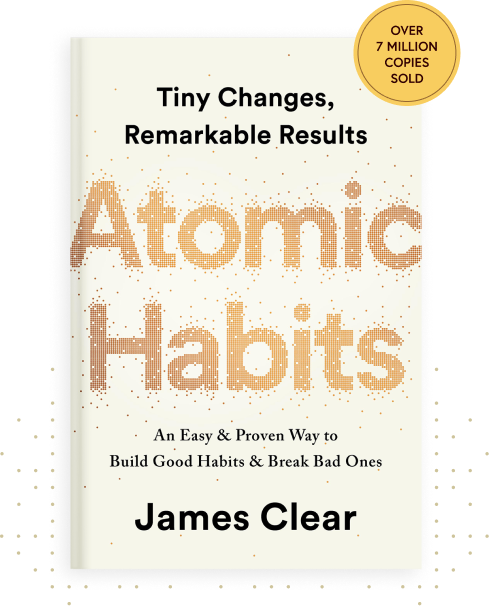
Atomic Habits: How Small Changes Lead to Extraordinary Results

· 2 min read
Arpit Sharma
Maintainer of this blog

Atomic Habits - Small Wins, Compounding Results

James Clear argues that the quality of our lives depends on the quality of our habits. We don't rise to the level of our goals; we fall to the level of our systems.

1. The Power of Compounding

A 1% improvement every day makes you 37 times better by the end of the year. This is the Aggregation of Marginal Gains.

  • Example: The UK cycling team won back-to-back medals after decades of failure by improving everything (seats, tires, even pillows) by just 1%.

2. Identity-Based Habits

Most people focus on outcomes (e.g., "I want to lose weight"). Instead, focus on identity (e.g., "I am the type of person who never misses a workout"). Every action you take is a vote for the person you wish to become.

3. The 4 Laws of Behavior Change

To build a good habit, follow these laws:

  1. Make it Obvious: Use "Environment Design." If you want to read more, put a book on your pillow.
  2. Make it Attractive: Use "Temptation Bundling." Only watch your favorite show while on the treadmill.
  3. Make it Easy: Use the 2-Minute Rule. If a habit takes less than 2 minutes, do it now.
  4. Make it Satisfying: Use habit tracking to visualize your wins.

4. The Goldilocks Rule

The human brain loves challenges, but only if they are "just right." If a task is too easy, you get bored; if it's too hard, you lose motivation. Aim for the zone just outside your comfort.

#learnings

Atomic Habits

The 4-Hour Workweek: Escaping the 9-5 Grind

· 2 min read
Arpit Sharma
Maintainer of this blog

The DEAL Formula to Lifestyle Design

Tim Ferriss’s cult classic is about more than just working 4 hours; it's about Lifestyle Design. The book follows the DEAL acronym: Definition, Elimination, Automation, and Liberation.

1. Ask for Forgiveness, Not Permission

If the potential damage is minimal and reversible, don't wait for a "yes." Waiting for others to guide you is a form of procrastination. Learn by doing, making mistakes, and iterating quickly.

2. Focus on Strengths, Not Weaknesses

Most people spend their lives trying to fix their flaws to become "well-rounded." Ferriss argues that multiplier results come from doubling down on your top 3 strengths rather than becoming "average" at your weaknesses.

3. Eliminate the "Fear of the Void"

Many people stay in unhappy jobs because they fear the unknown. They expect things will change "some day." Dreamlining is the antidote—calculating the exact cost of your dreams and realizing that your "worst-case scenario" is often quite survivable.

4. The 80/20 Rule (Pareto Principle)

80% of your results come from 20% of your activities.

  • Identify the 20% of tasks that produce the most value and focus exclusively on them.
  • Fire the 20% of clients who cause 80% of your stress.

Conclusion: Too much money is rarely the answer. The real currency is Time and Mobility.

#learnings

Finish: The Practical Guide to Killing Perfectionism

· 2 min read
Arpit Sharma
Maintainer of this blog

FINISH: Why Done is Better Than Perfect

Most people don't have a problem starting; they have a problem finishing. Jon Acuff argues that our biggest obstacle isn't laziness—it's perfectionism. Here is the blueprint to escape the perfectionism trap:

1. Cut Your Goal in Half

Perfectionism tells you to "Go Big or Go Home." Acuff says to cut your goal in half. By making the goal achievable, you take the pressure off and actually build the momentum needed to cross the finish line.

2. Choose What to Bomb

You cannot be perfect at everything while chasing a new goal. Be intentional about what you are going to let slide (e.g., maybe your house won't be as clean while you're writing that book). Write a "Not-to-Do" list to stay focused.

3. Make it Fun if You Want it Done

Satisfaction and performance are linked. Identify what motivates you:

  • Reward Motivation: "If I finish this, I get to enjoy a guilt-free movie."
  • Fear Motivation: "If I don't finish this, I'll have to pay a fine or lose health." Use whichever works for you to keep the process enjoyable.

4. Leave Your "Hiding Places"

A Hiding Place is an activity you focus on instead of your goal (e.g., organizing your desk when you should be coding). A Noble Obstacle is a rational-sounding excuse (e.g., "I can't start the YouTube channel because I don't have a 4K camera").

The Bottom Line: Chase progress, not perfection. Publish your "Version 1.0"—however bad it may be—and then iterate.

#learnings

Crush It! - Turning Passion into a Personal Brand

· 2 min read
Gary Vaynerchuk
Original Author
Arpit Sharma
Maintainer of this blog

Crush It: The Art of Personal Branding

Gary Vaynerchuk’s core message is simple: in the digital age, anyone can turn their passion into their profession. But doing so requires more than just interest—it requires turning yourself into a Personal Brand. Here are the actionable steps to nail it:

1. Identify Your Content Medium

Don't follow the crowd; follow your strengths. If you're great on camera, use Video (YouTube/TikTok). If you have a "radio face" but a great voice, use Audio (Podcasts). If you think more clearly in text, use Writing (Blogs/Twitter).

2. Document, Don't Create

Gary’s "secret sauce" is to stop overthinking and start documenting your journey. You don't need a high-budget studio; you need authenticity. People connect with the struggle and the process more than the perfected end product.

3. Hustle and Care

Hustle is the cost of entry, but "caring" is the differentiator. You must care about your community more than the money. Reply to every comment, engage with every follower, and build real relationships.

4. Be Your Own Brand

In the 21st century, your personal brand is your resume. Whether you're an employee or a business owner, being known for "what you do best" is your only survival strategy in an automated world.

#learnings